When we talk about setting and achieving goals, we often focus on the end result. But the journey to a goal is just as important as the goal itself. That’s where milestones come in. Milestones are not just optional checkboxes. They’re essential for driving focus, momentum and accountability.
In this article, we’ll explore what milestones are, how they differ from goals, why they’re essential in business and how to integrate them effectively into your performance management system.
What Are Milestones in Performance Management?
Milestones are specific, measurable checkpoints on the path toward a larger goal. Think of them as signposts that show you’re heading in the right direction. While goals describe the destination, milestones define key progress points along this way.
For example, if your goal is to launch a new learning and development program by Q4, a milestone might be “Complete learning program development by the end of Q2” etc.
Milestones help break long-term or complex goals into smaller, more manageable parts . This theme we covered in our article “From Vision to Action: Making Long-Term Goals Achievable”.
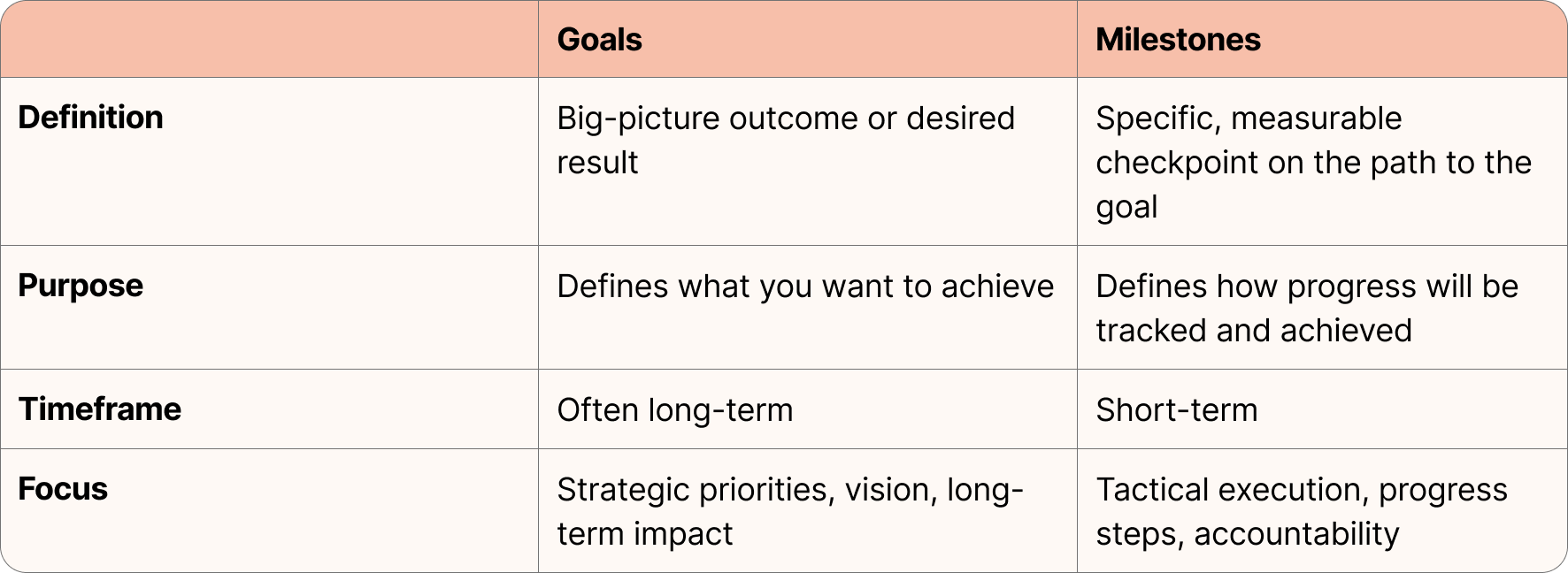
Milestones vs Goals: Key Differences
A goal is the big-picture result you want to achieve. It’s often ambitious, time-bound and aligned with strategic priorities.
Milestones, on the other hand, are tactical. They focus on the “how” to achieve a goal.
This distinction is crucial. Setting milestones helps reduce overwhelm and increase clarity, especially for longer or team-based projects.
Milestone Examples
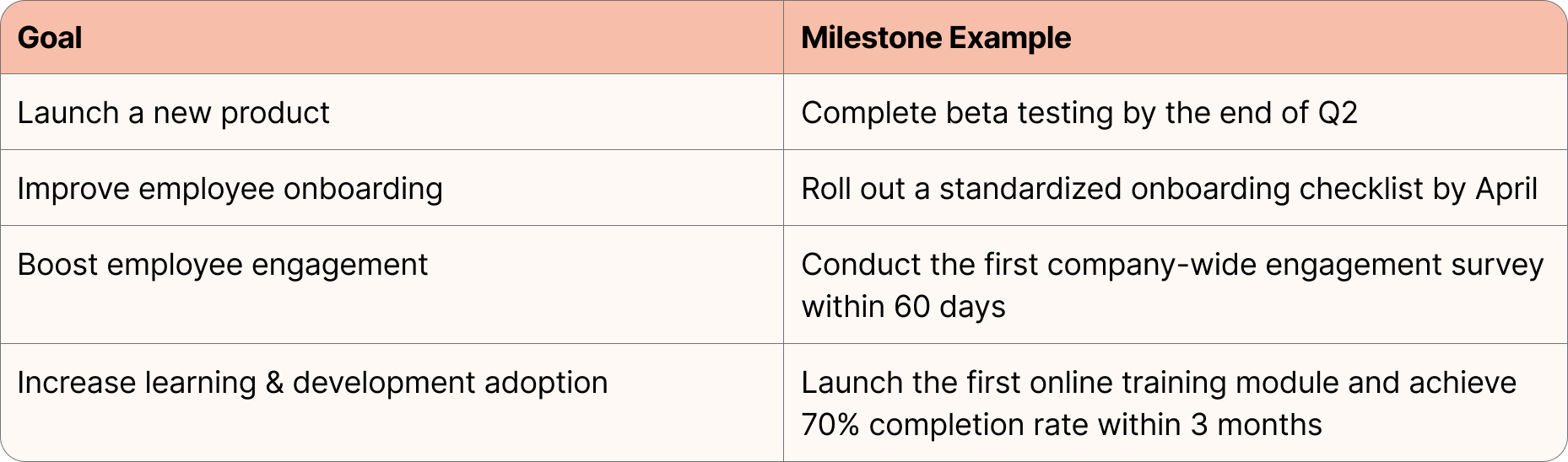
Why Milestones Matter in Performance Management
In performance management, milestones help:
- Create visibility: Teams and individuals can see progress in real time.
- Encourage accountability: Everyone knows what needs to be done and by when.
- Support continuous feedback: Milestones create natural moments to check in, give feedback or adjust course — a principle we explored in this article.
- Motivate through momentum: Achieving a milestone gives a sense of progress, which is known to boost engagement. In fact, small wins are one of the most powerful sources of workplace motivation.
To sum up, milestones help turn vague goals into a series of achievable steps, improving focus and reducing uncertainty.
Common Mistakes When Using Milestones
Even though milestones can significantly improve goal achievement, many companies use milestones ineffectively. Here are some common problems:
- Milestones are too far apart
When milestones are spread out over several months, they don't create momentum. Team members may feel like nothing is happening in the short term and motivation may drop. Break the work down into smaller steps. Each step should be completed within 2 - 4 weeks.
- Milestones are vague
A milestone like "Improve сommunication in a team" doesn't give the team a clear definition of success. It's difficult to measure. Instead of this, be specific. If a milestone can't be clearly defined as "done," it's not a milestone.
- Using milestones as rigid deadlines
Sometimes milestones are treated more as fixed deadlines and assessments than as progress indicators. This creates unnecessary pressure and stress. Treat milestones as checkpoints, not reviews. Milestones are designed to guide employees and help them achieve their ultimate goals.
- Misaligning milestones with actual workflows
Sometimes milestones look great in planning tools, but they don't reflect how teams actually work. As a result, they're ignored because they seem irrelevant. Involve teams in defining milestones. Co-creation increases employee engagement and understanding.
How to Define Effective Milestones
Milestones are only useful if they help teams make steady, visible progress toward their goals. But in practice, many milestones are either too vague, too ambitious or not tied to anything measurable which makes them easy to ignore or abandon.
Here’s how to define milestones that actually move work forward and improve clarity for teams and managers.
- Start from the goal
Every effective milestone starts with a clear goal. Before you define any intermediate steps, make sure the end goal itself is well-structured. Then break it down into concrete actions or decision points that need to happen along the way.
- Try to make each milestone specific, time-bound and measurable
Teams need to clearly understand what exactly they need to accomplish and by when.
- Align with the bigger picture
Milestones should never exist in isolation. Every milestone should clearly support a larger goal or KPI. Moreover, this connection should be visible in your performance dashboards.
- Align the amount of work with employee capacity
One of the main obstacles to completing milestones is extreme scope. If milestones are too large or disconnected from day-to-day tasks, they lose priority. A good milestone should be achievable within a short timeframe and consistent with the current workload.
Tools to Track and Visualize Milestones
Using Excel spreadsheets to manage goals and milestones might work for very small teams but it quickly becomes unsustainable. A modern performance system like Okrate provides:
- A visual dashboard showing progress toward each goal and milestone
- Ability to set and track milestones
- Visibility into who owns what and where things stand
- Historical data
- Easy updates, comments and collaboration
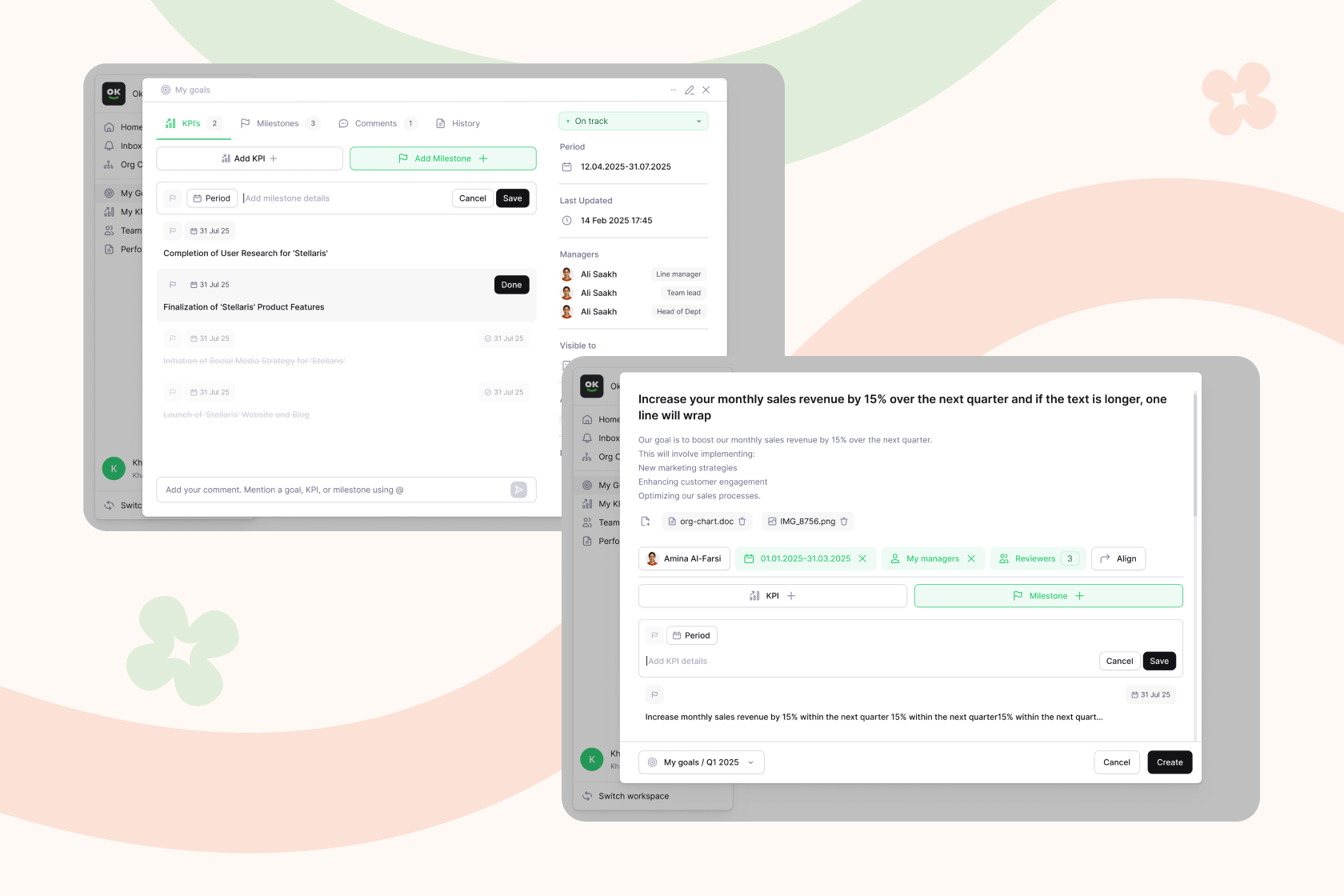
Tools that are user-friendly and flexible allow teams to stay aligned without getting lost in admin work. As we’ve discussed across multiple articles, performance systems should not only track results, but also support focus, clarity and teamwork.
Setting goals is essential. But setting milestones is what makes those goals actionable. Whether you're building a new initiative, rolling out a product or transforming performance culture, milestones provide the structure and motivation teams need to keep moving.
If you’re already working with OKRs, SMART KPIs or continuous check-ins don’t forget to include milestones. They’re what turn strategy into real, trackable results.
Setting goals is essential. But setting milestones is what makes those goals actionable. Whether you're building a new initiative, rolling out a product or transforming performance culture, milestones provide the structure and motivation teams need to keep moving.
If you’re already working with OKRs, SMART KPIs or continuous check-ins don’t forget to include milestones. They’re what turn strategy into real, trackable results.