In today’s dynamic workplace, performance management isn’t just about annual reviews, it’s about building systems that drive real growth, clarity and engagement over time. Simply scheduling yearly reviews or setting vague stretch goals isn’t enough. This article explores modern, effective performance measurement methods and explains exactly how and why they work.
Why measuring Performance Management matters in 2025
Managing employee performance goes beyond measuring output. It’s about understanding impact, guiding development and adapting to changing business needs. According to McKinsey, organizations that focus on their people’s performance are 4.2 times more likely to outperform peers, achieve 30% higher revenue growth and experience 5% lower turnover.
Outdated systems such as annual review models that don’t guide day-to-day performance waste time and undermine trust. A Harvard Business School study shows companies that shift to dynamic, frequent feedback see significantly better retention and development outcomes.
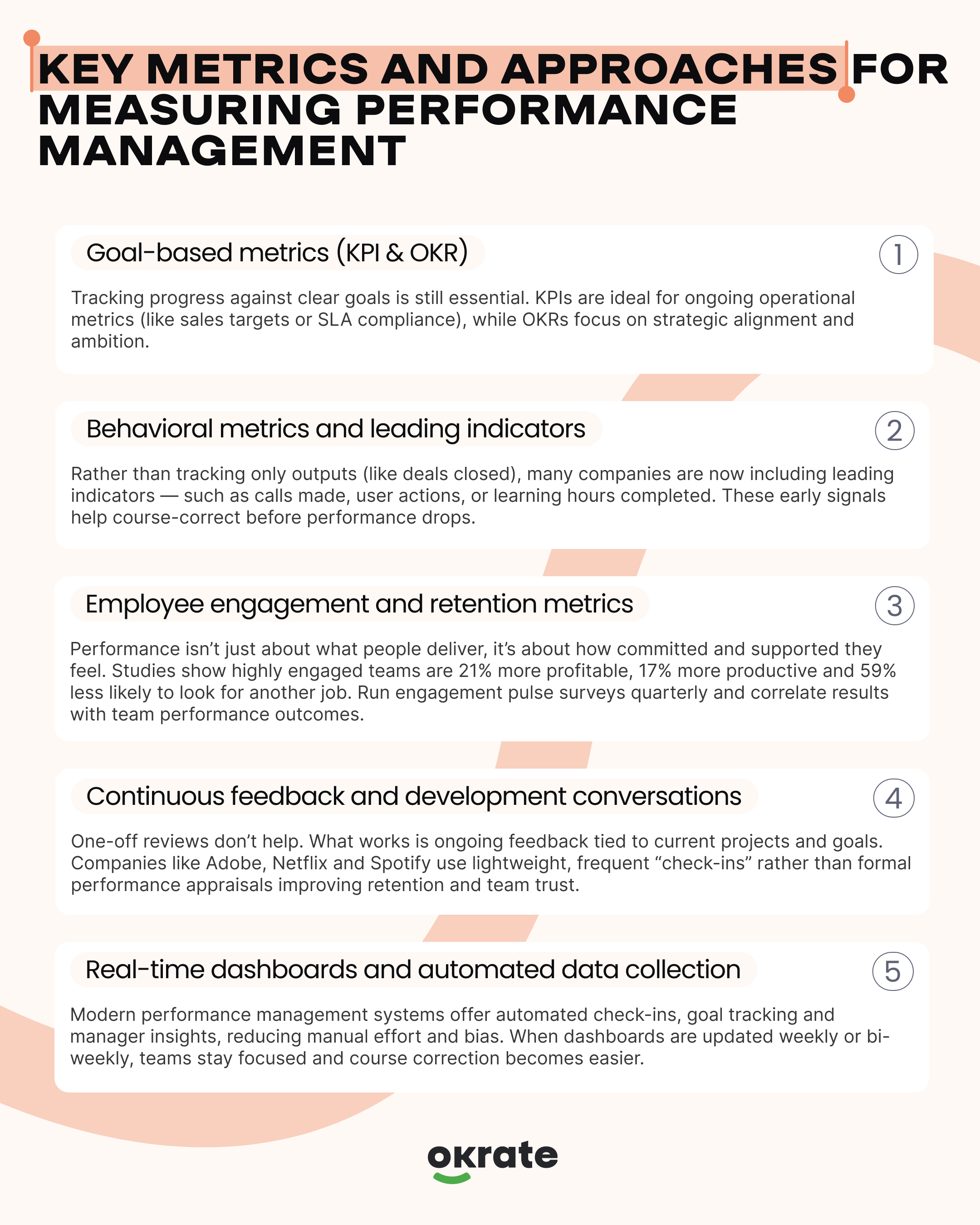
Key metrics and performance measurement approaches
A modern Performance Management system should combine quantitative monitoring, qualitative data and behavioral signals. Here is a list of metrics and methods that really contribute to improvement:
Signs your Performance Management system isn’t working
If your current system doesn’t support employee growth or drive better outcomes, it’s time to rethink it. One of the most common issues is that performance reviews become routine checkboxes, disconnected from real development. Feedback is often delayed or vague, leaving employees unsure how to improve. Many companies also focus too much on rigid metrics and overlook personal growth and team dynamics.
When that happens, performance management becomes a compliance task rather than a tool for progress. Employees lose motivation, managers don’t have clear guidance and HR sees no real return on the process.
Combining quantitative and qualitative metrics for better insights
One of the most common mistakes in performance evaluation is relying only on numbers like goal completion rates, KPI dashboards, performance scores. But these metrics don’t capture the full picture of how someone performs in a complex, collaborative environment.
A more effective approach is to combine quantitative metrics (like OKR completion, sales performance, etc) with qualitative input from peers, managers and even customers. This dual method is sometimes referred to as “balanced performance measurement.”
For example:
- Use quantitative KPIs to track output, consistency and business results.
- Use structured feedback (like 360 reviews or behavior-based assessments) to assess soft skills, leadership, team contribution and learning mindset.
This approach gives managers and HRs better context and helps employees feel seen as more than just a number. It also makes reviews more useful and less demotivating.
Best practices that actually improve Performance
1. Regular OKR and KPI check-ins help keep teams aligned
Frequent check-ins weekly or every two weeks are essential for tracking both strategic (OKR) and operational (KPI) goals. They help teams identify blockers early, adjust priorities, and stay focused.
2. Move toward a continuous feedback culture
Instead of annual reviews, organizations are shifting to frequent, lightweight feedback loops. This approach reduces anxiety and helps employees adjust their performance in real time. Regular feedback also increases employee engagement and strengthens the relationship between managers and their teams.
3. Prioritize development
Performance systems should include not only outcome-based goals like hitting targets but also development goals like building a new skill.
4. Tie goals to real work
One of the biggest problems in performance management is that company goals are often shared during all-hands or planning meetings but never show up in daily team work. People don’t see how their tasks link to bigger priorities, so they lose motivation. To fix this, goals should be part of everyday work, discussed in team meetings, sprint planning or weekly check-ins. When employees understand why they’re doing something and how it supports the company’s goals, they stay more focused and engaged.
It’s also critical to actually track these goals not in Excel or scattered documents, but in a clear, shared system. Use dashboards where everyone can see progress at a glance. This makes the goals visible, real and easier to talk about.
Modern performance measurement is not just about tracking outputs, but about understanding the full employee experience, supporting ongoing development and adapting based on real signals. HRs and managers need to mix traditional metrics with continuous learning and human insight.