Engagement surveys have become a gold standard in HR analytics. They’re easy to run, give everyone a voice and offer clear numbers to show leadership. But here's the problem: in many companies, the numbers look great on paper, while in reality, productivity quietly drops, deadlines are shifting and the teams aren’t reaching maximum efficiency.
So here’s the uncomfortable truth: your engagement survey isn’t giving you the full story. And if you're not looking at performance metrics alongside it, you’re likely missing early signals that something goes wrong.
Why can't you rely only on engagement surveys?
Engagement surveys are useful, but you can't rely on them alone because they have their own limitations.
First, they often reflect how people feel at the moment, not how they behave over time. For example, an employee might rate their team culture highly today, but be quietly applying for jobs tomorrow… Someone else might feel disengaged but still achieve every target on their goals. According to Gallup, while engagement data is a key predictor of performance, only 33% of global employees are actively engaged and in many companies, even those who are “engaged” still show signs of burnout, stagnation or quiet quitting.
Second, there’s the trust problem. Many employees don’t believe their answers are truly anonymous or they’ve seen too many surveys with no action afterward. So they give safe responses (neutral, polite and vague). As a result, the data you get doesn’t reflect an honest picture of what is happening. Harvard Business Review also notes that surveys can't measure all the nuances and details: team dynamics or tensions between managers and employees aren't always reflected on a 1-to-5 rating scale.
What KPIs can reveal but surveys often miss
Engagement surveys show what people are saying. Key performance indicators show what people are doing.
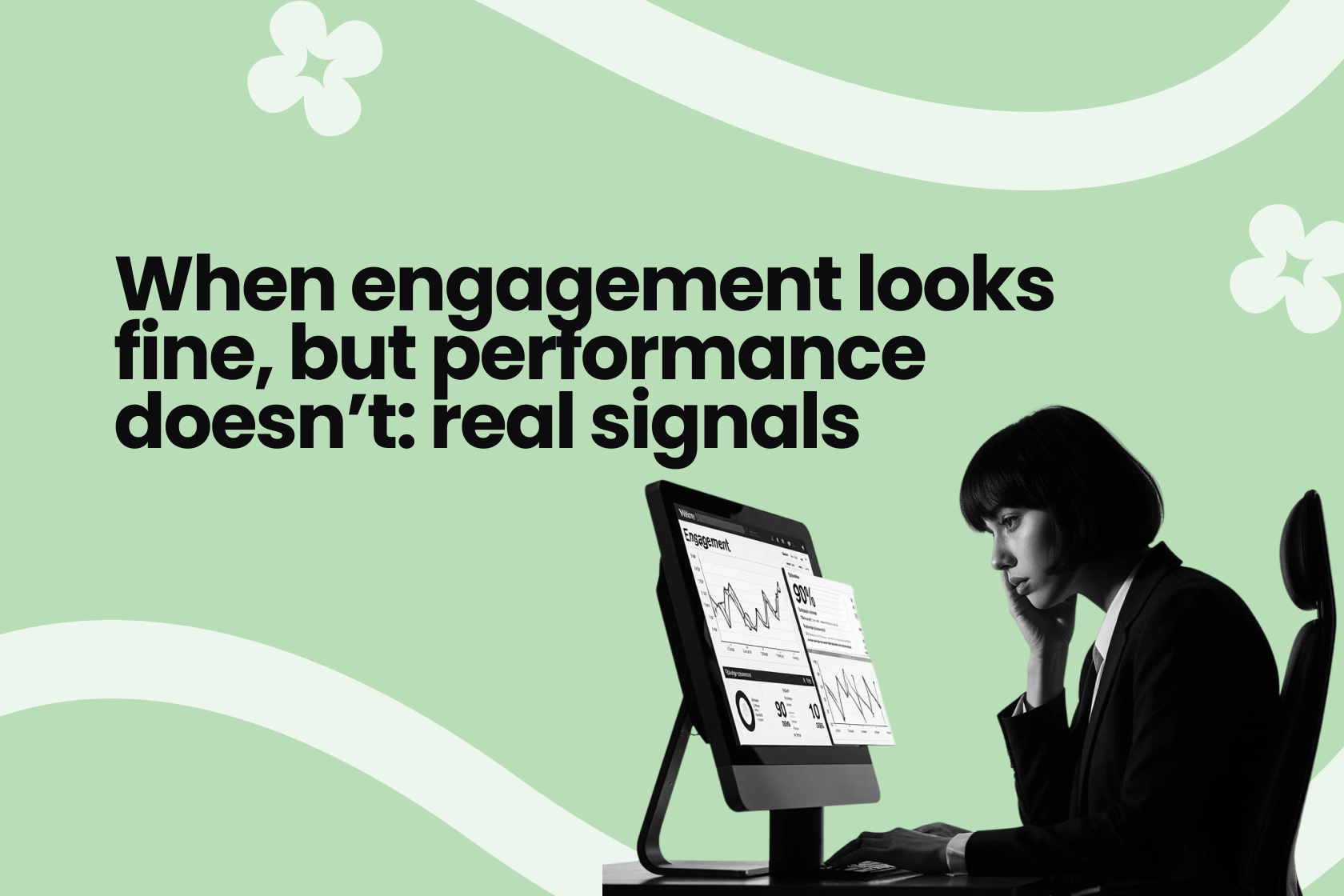
When someone says they feel “motivated” but are constantly missing deadlines, failing to meet goals or taking more sick days than usual, that’s a red flag. When a team is 90% engaged but performance metrics are down across the board, that’s a sign that something isn’t working or going wrong.
KPI data won’t tell you why someone is burned out or what exactly is wrong with the team dynamic. But it does tell you where to look. In many cases, KPIs pick up on issues before they show up in surveys.
Here are some signs to watch for:
- Drop in delivery speed or output. It could signal overload, low focus, lack of clarity or early signs of disengagement.
- Increased absenteeism or soft quitting. When people don’t quit but slowly disconnect from their role.
- Low participation in team rituals like 1:1s, OKR check-ins, retrospectives. A decline often means someone feels disconnected or doesn’t see value anymore.
- Less collaboration across teams. When people stop reaching out, helping others or offering ideas, it can mean trust and engagement are not in the best condition.
- High effort, low outcome. Employees are busy but results are weak. This could point to burnout, misaligned priorities or lack of support.
For HR and people managers, KPIs aren’t just business metrics. They’re tools for early detection. They help you ask the right questions, catch problems before they grow, and connect business outcomes with the human side of work.
Don’t look at KPIs in isolation. Always compare them with survey results, feedback from managers and what you’re hearing in 1:1s. If there’s a gap between what people say and what they do, that’s not a data problem — it’s a sign you need to look deeper, open up a conversation or rethink how goals and support are structured.
How to make engagement and KPI data work together
Engagement surveys give you insight into how people feel. KPIs show you what they do. If you look at them separately, you’ll miss critical signals. But when you connect them, you get a much more honest picture of how your team is really doing and what they need to stay motivated and productive.
Why combining both is essential
For example, a team is highly engaged, but progress on OKRs is not being made, and more and more people are missing deadlines. This could mean that people are feeling overwhelmed or confused about what’s really important and where to focus. On the other hand, a team might be meeting all of their goals, but their survey responses seem unconvincing.
Looking at both engagement and performance lets you catch these gaps early before they turn into burnout, quiet quitting or high turnover.
What HRs and managers can do in practice
To get the full picture, you need to compare signals across different tools, channels and behaviors.
1. Look for inconsistencies in the data and use it as a benchmark
If your latest engagement survey shows high employee satisfaction, but you notice problems or discrepancies with reality, then it’s worth paying attention. Discuss these in one-on-ones or retrospectives.
2. Track trends over time and in the long term
One bad survey result or missed KPI doesn’t mean that a crisis has occurred. But if the same metric keeps going down month after month, that’s a trend. HR professionals and managers should pay attention to periods of 3-6 months: Is the pace of work slowing down? Is employee initiative decreasing? And so on.
Use trend dashboards or a simple spreadsheet to track changes. Monitor the dynamics so you can act early.
3. Make sure KPIs reflect real employee performance
One-size-fits-all metrics won’t give you useful signals. It’s important to set KPIs for different roles. This will help track real progress and performance, not just empty metrics. If someone is hitting a KPI but still seems stuck or disconnected from reality, ask: “Is this metric still relevant?”, “Does the person understand how this goal ties into the bigger picture and their contribution?”.
4. Monitor for changes in employee behavior
Some of the signs of disengagement are difficult to spot on dashboards and surveys. Look for different signals, such as short and vague survey responses or minimal participation in check-ins. Managers should be trained to spot these subtle changes and gently raise them in person: “I’ve noticed that you’ve become less active during check-ins lately — is this okay, or is there anything we need to adjust or help with?”. This strategy will help prevent more serious problems in the future.
What to do if there are mismatches between engagement and performance?
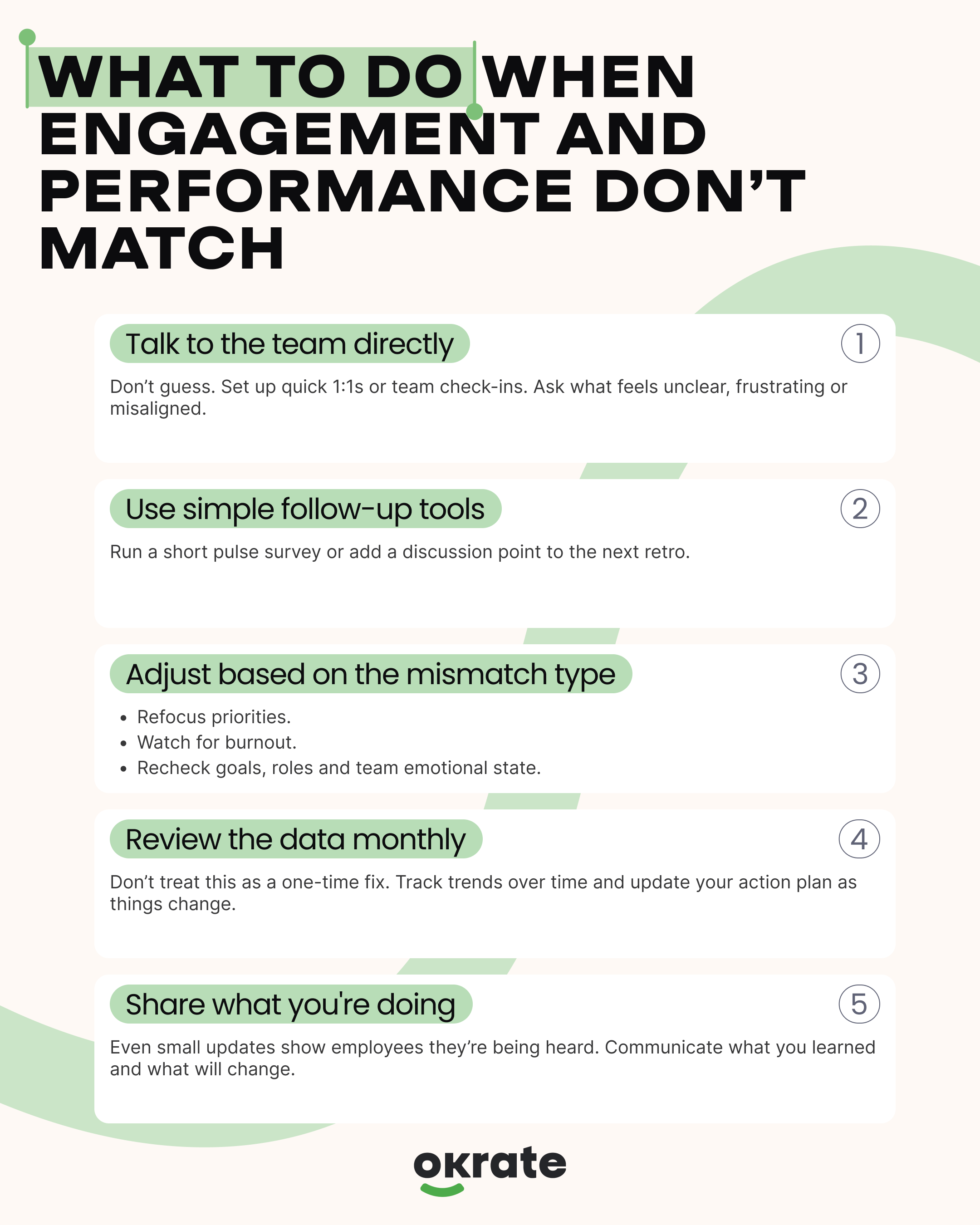
If your engagement metrics and performance metrics don't match, it doesn't mean the data is wrong, it means there's something important to look at. These mismatches are often early signals of misalignment, confusion or burnout. Here’s how to interpret the gap and what you can actually do about it:
High engagement, low performance
People say they’re happy and motivated, but the team isn’t hitting goals. This usually means that employees may not understand in which direction to move and what to focus on. It's a common problem in newly formed teams or after big changes.
What to do in this case:
- Double-check whether goals are clear, realistic and understood by employees.
- Ask employees in 1:1s: “Is everything clear or are there any problems or difficulties?”.
- Break down large goals into smaller checkpoints. This gives the team visible progress and focus.
- Check if managers are actively supporting planning, removing blockers and coaching, not just assigning tasks.
Low engagement, high performance
The team is highly effective, but motivation is falling. People may be working on autopilot or overloading themselves. This situation can lead to burnout, loss of effectiveness or even dismissal.
What to do:
- Talk to employees about their emotional state and workload, not just results.
- Run quick pulse surveys (2–3 questions) focused on emotional state.
- Celebrate efforts and even small wins. Lack of recognition is one of the main reasons for disengagement in teams.
Stable engagement, declining KPIs
Survey results remain the same (stable), but performance is declining. This usually means that people are not losing engagement, but they are simply not in sync with their work. Perhaps KPIs have lost their meaning or people don’t understand why certain goals are needed and how to achieve them.
What to do:
- Review KPIs or OKRs with your team. Agree on them.
- Find outdated metrics and update them.
- Give teams more power to define success, co-creation builds a sense of accountability.
Surveys help you understand how people feel. KPIs help you understand what they do. Only by bringing these together and interpreting them with curiosity, not assumptions, you can see the full picture of team condition.
The main goal isn’t to replace engagement surveys, but to complement them and to build a people strategy that works.