A well-run performance review isn’t about judgment—it’s about growth. According to Gallup, employees who receive meaningful feedback are 3.6x more likely to be motivated to do outstanding work. Yet many organisations still treat reviews as a compliance exercise.
Still, most managers struggle with how to run reviews effectively — what to ask, how to structure feedback and how to keep it fair. Templates solve that. They give consistency, save time and make sure reviews don’t depend on a manager’s intuition alone.
Below are 11 types of performance review templates with explanations, examples and expert advice on when and how to use each.
1. Annual Performance Review Template
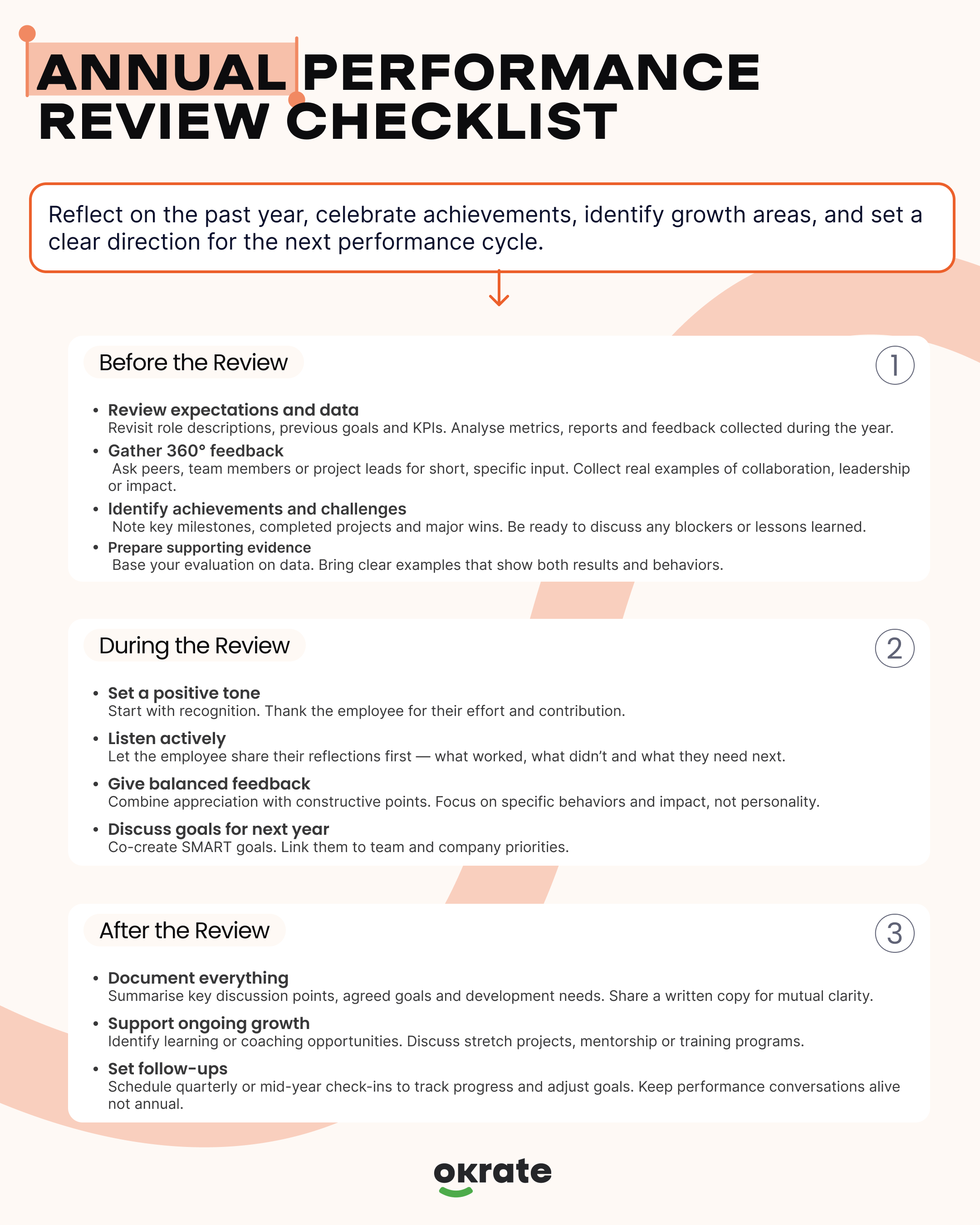
The main goal is to summarize a full year’s performance, highlight achievements and define development priorities. Best for companies with structured yearly review cycles or bonus-linked evaluations.
The annual review remains a cornerstone for strategic reflection — a big picture to recognize progress, analyze goals and set direction for the year ahead.
A good annual template includes:
- Key goals and outcomes with data or examples
- Strengths and standout contributions
- Areas for development and support needed
- Future goals
Suggested quasrions
- What are you most proud of this year?
- What challenges limited your performance?
- What new skills or experiences would help you grow?
- How can your manager or team better support you?
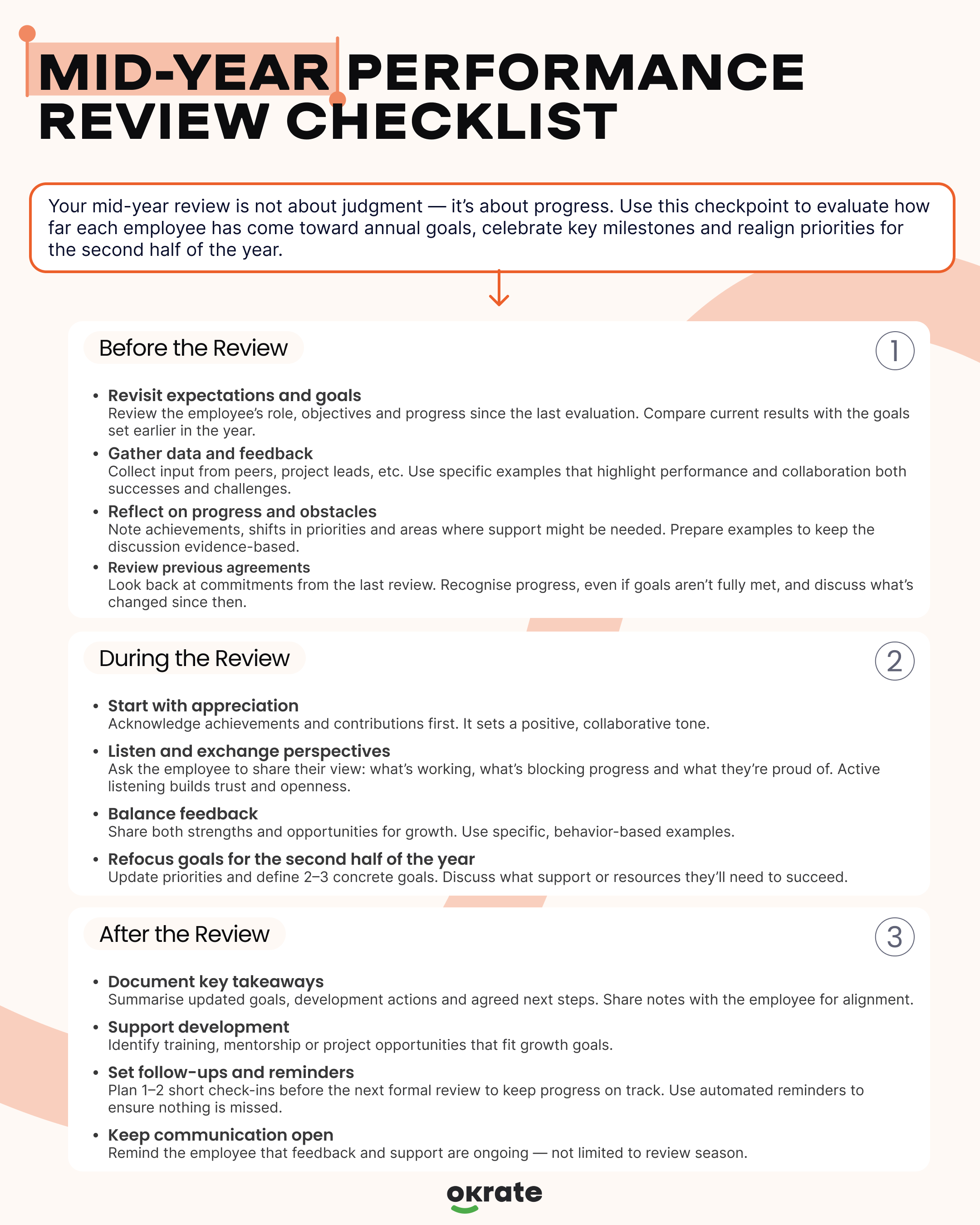
2. Mid-Year Review Template
It’s a structured half-year check to realign goals and expectations. Best for agile companies or fast-paced environments where priorities shift often.
Think of mid-year reviews as course correction. The format usually includes:
- Review of current goal progress
- Identification of new priorities
- Discussion of challenges, blockers, and skill gaps
Suggested questions
- What’s gone well so far this year?
- What challenges have slowed you down?
- What would help you perform even better in the next six months?
- What are your top priorities for the rest of the year?
- How can your manager or team best support you?
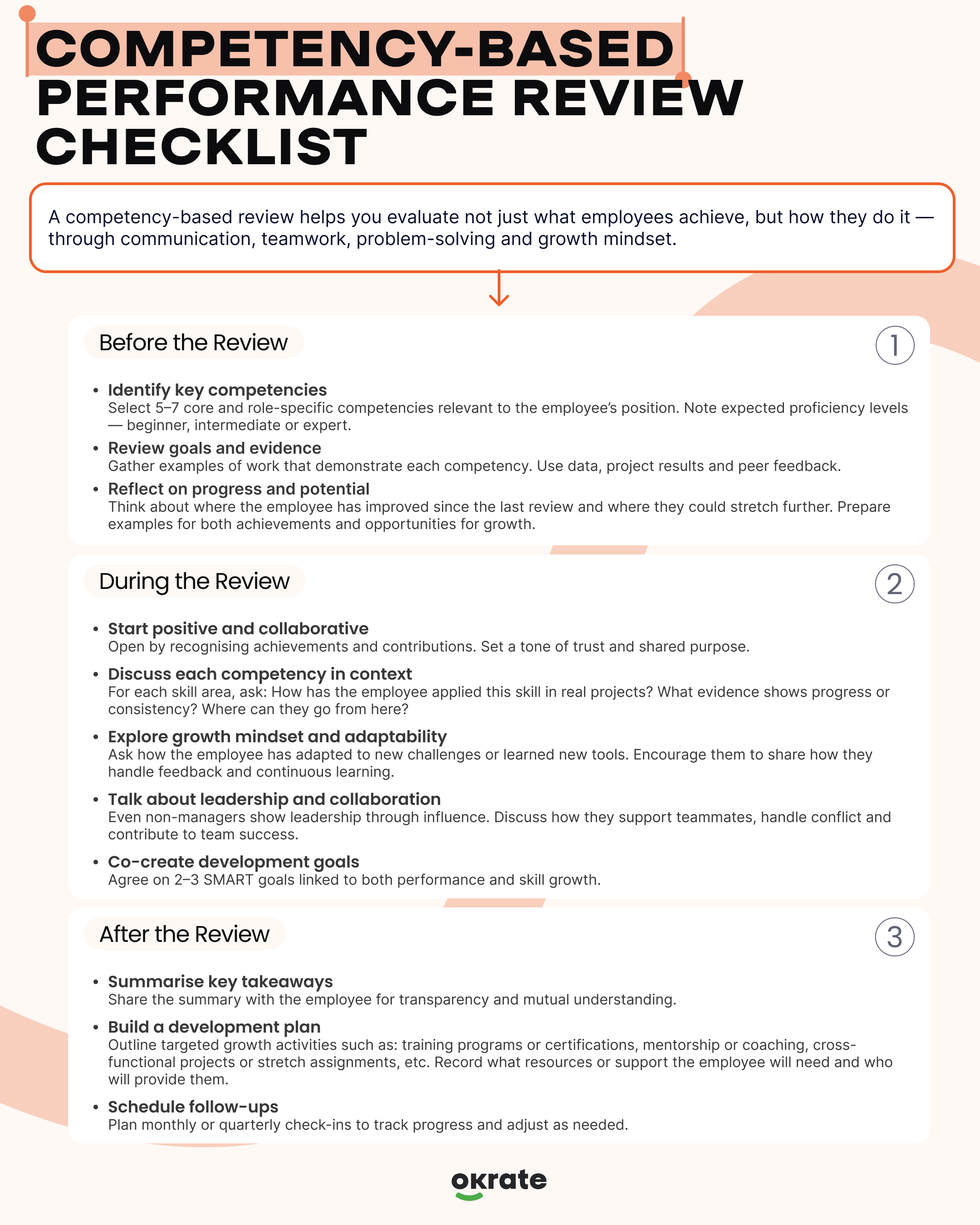
3. Competency-Based Review Template
Helps evaluate how employees demonstrate core skills and behaviors essential to success. Best for organisations with defined competency frameworks or career levels (engineering, management, design, etc.).
This approach helps managers assess how people achieve results — communication, teamwork, leadership, adaptability, problem-solving, etc.
Suggested questions
- Which projects best demonstrate your strengths this period?
- What skill or competency do you want to focus on next?
- How can I better support your development?
- Where do you see your biggest growth opportunity this year?
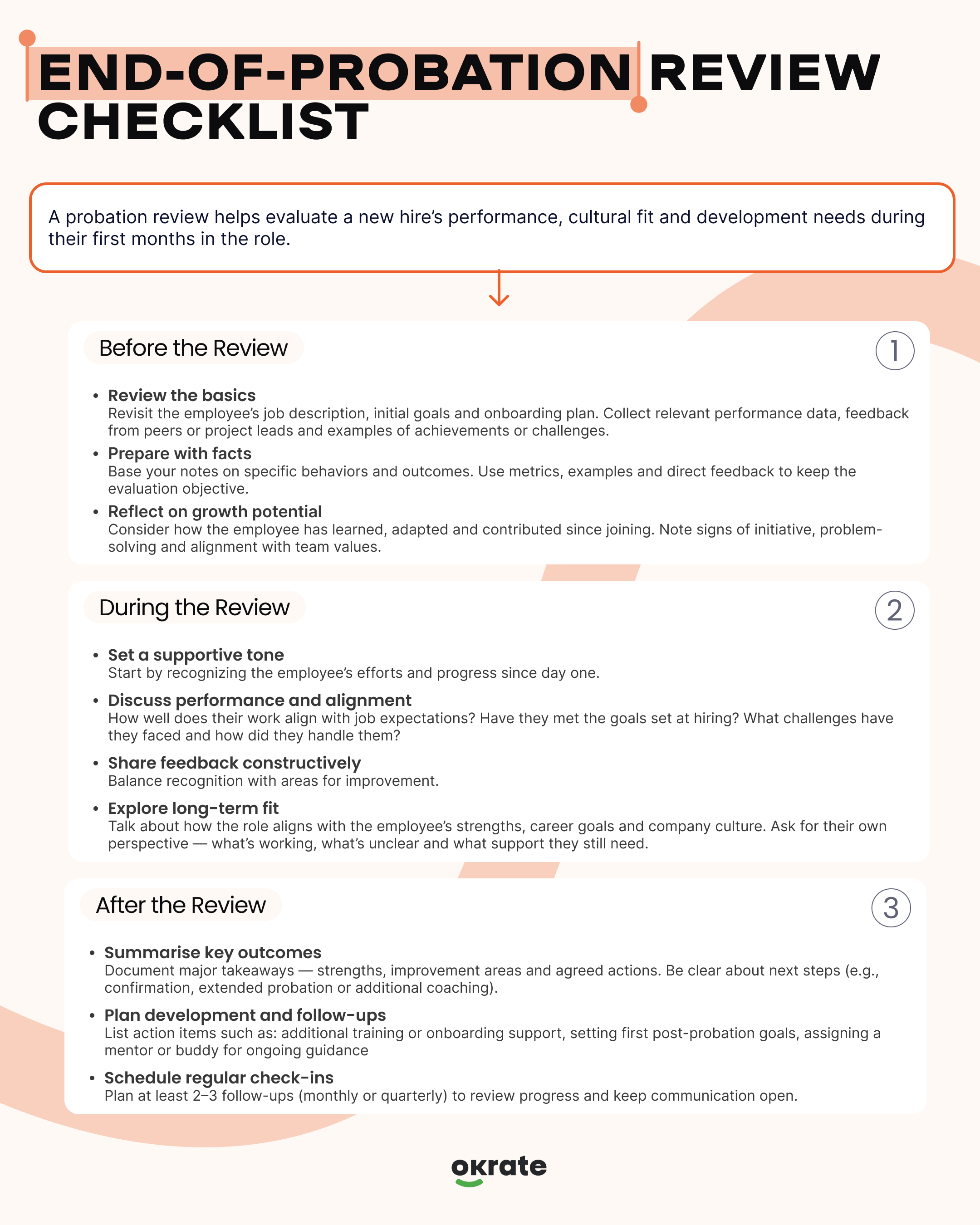
4. End-of-Probation Review Template
The main goal is to evaluate new hires’ fit, progress and readiness for full employment. Best for HR and managers assessing 3 – 6 month probation periods.
The best probation reviews combine performance feedback with onboarding insights:
- Did the employee meet initial objectives?
- How well did they adapt to company culture?
- What support do they need?
Suggested questions
- What are you most proud of from your first months here?
- What has helped you adjust successfully?
- What’s been the biggest challenge so far?
- What additional support or clarity would help you perform better?
- How do you see yourself growing in this role over the next six months?
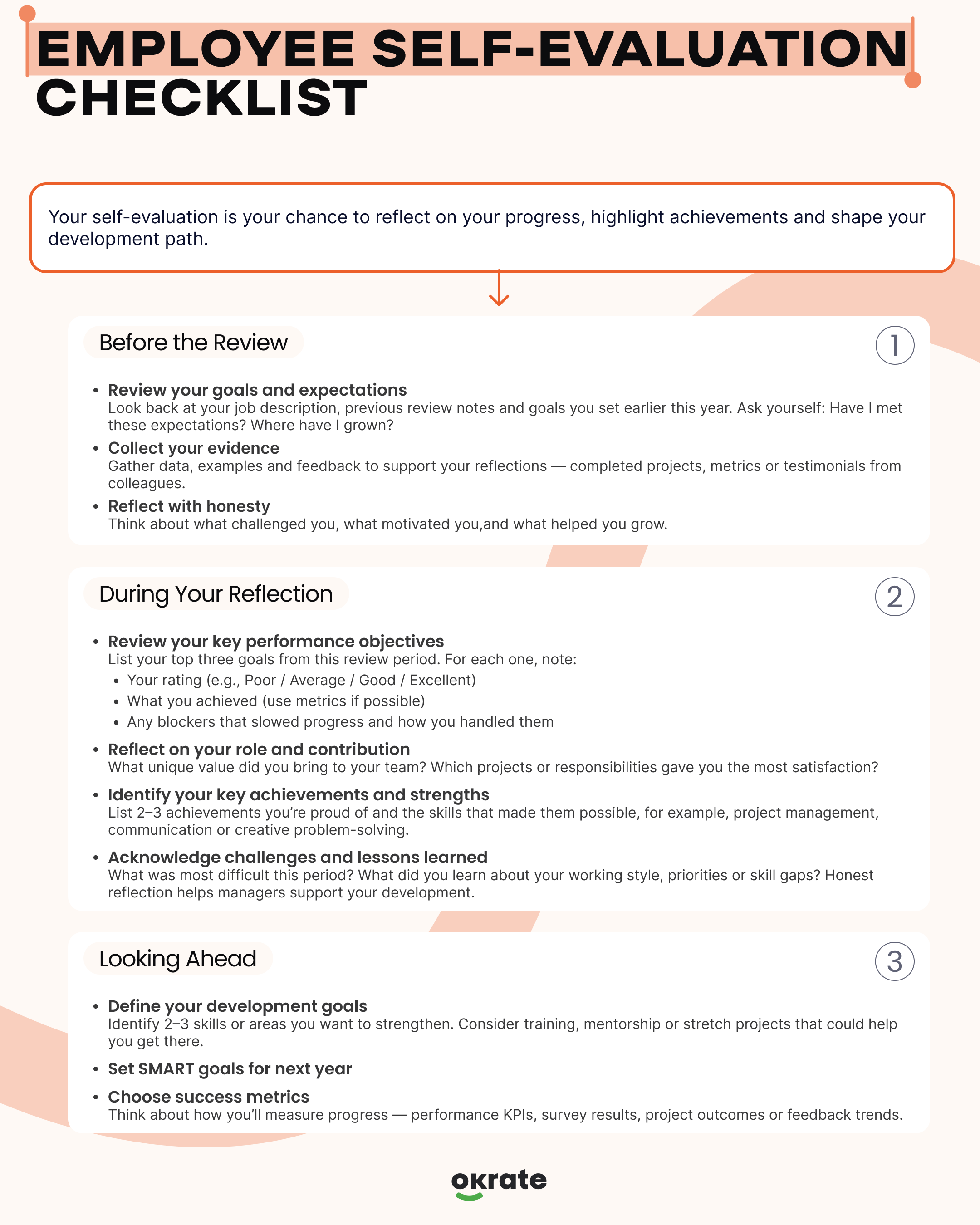
5. Employee Self-Evaluation Template
Encourage employees to reflect on their own performance and future growth. Best for all teams, especially when building a feedback culture.
Self-evaluations foster ownership and transparency. Include questions like:
- What were your biggest wins this cycle?
- What challenges did you face and how did you address them?
- Which skills do you want to strengthen next quarter?
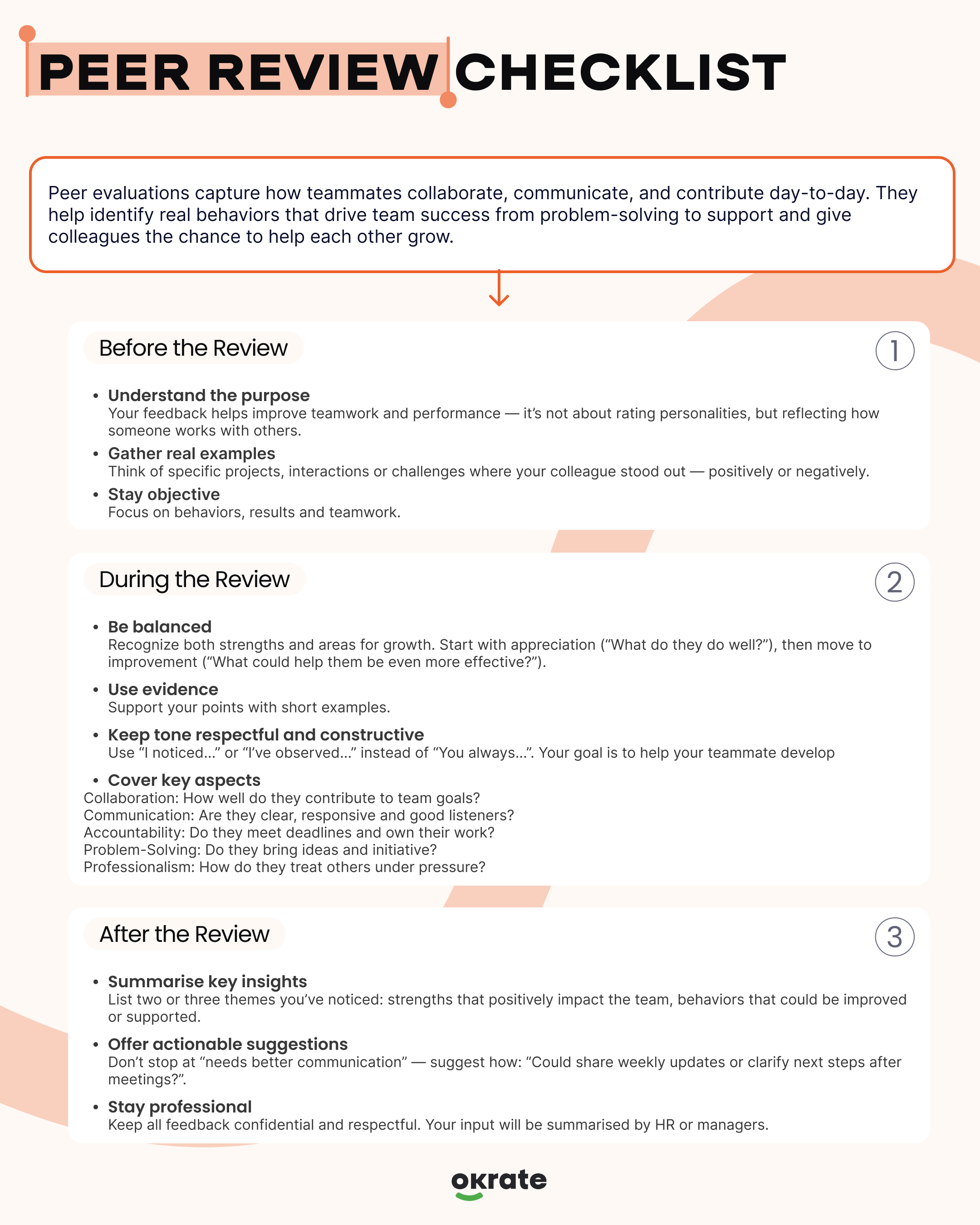
6. Peer Review Template
Capture how colleagues experience working with someone, from collaboration to reliability. Best for cross-functional teams or remote organisations where managers may not observe daily interactions.
Keep peer reviews focused and fair. Ask peers to share specific examples of teamwork, communication or problem-solving. Example question: “How did (Name) contribute to team outcomes or help others succeed?”
7. 9-Box Grid Template
It helps identify talent potential and performance to support succession planning. Best for HR leaders and executive teams managing larger talent pools.
The grid maps employees across two axes:
- Performance
- Potential
This helps visualise who’s ready for promotion, who needs coaching, where to invest in development, etc.
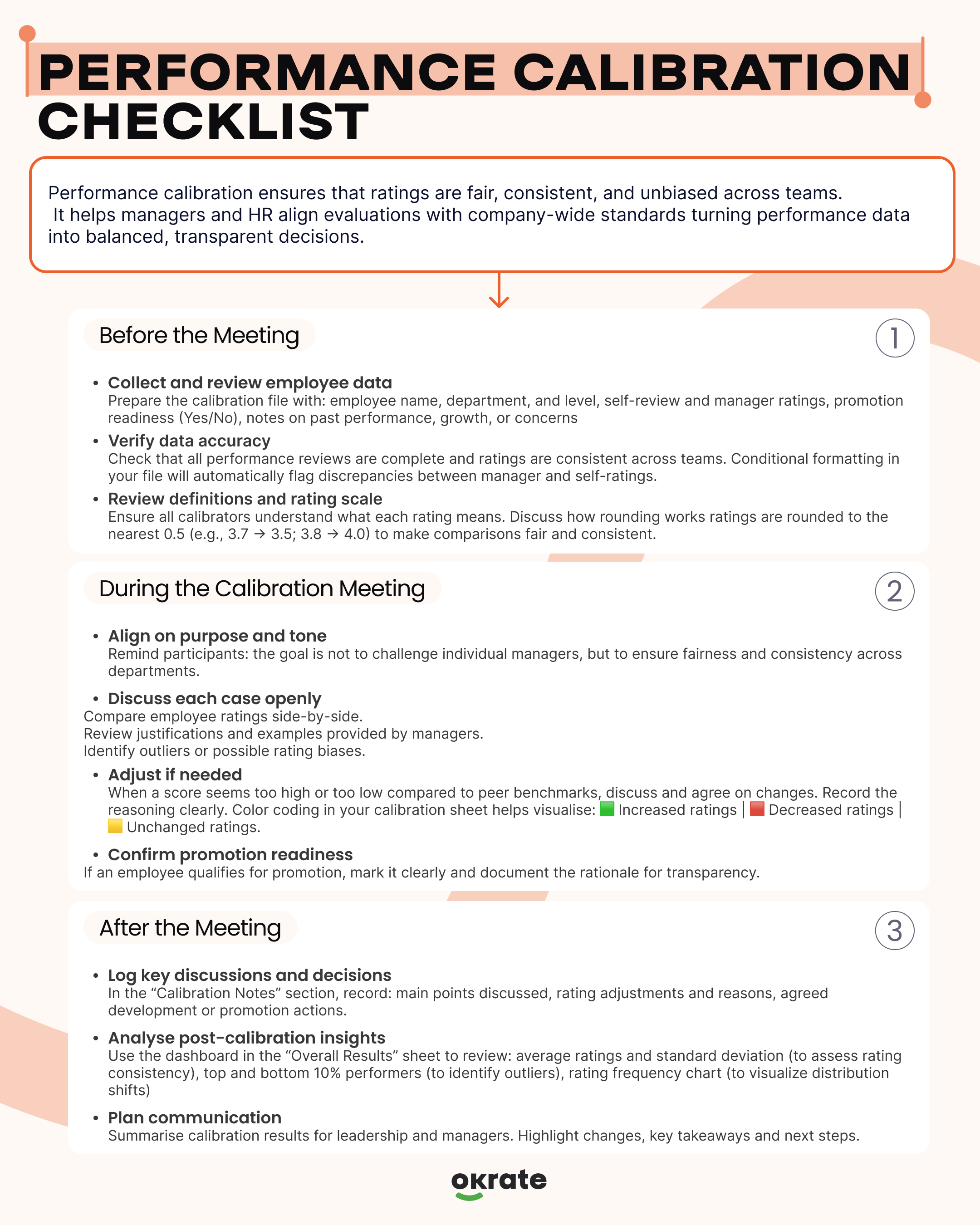
8. Calibration Template
It creates consistency and fairness in performance ratings across managers. Best for mid-size and enterprise companies.
Calibration meetings let managers compare results side-by-side and adjust biases. The template includes:
- Employee name, role and department
- Performance rating
- Manager justification
- Agreed adjustments after review
9. 360-Degree Review Template
Combine multiple perspectives — manager, peers, direct reports and self — to assess overall impact. Best for leadership roles or senior specialists with broad influence.
This method builds a full view of strengths, blind spots and leadership style. Typical sections:
- Self-assessment
- Peer feedback
- Direct report feedback
- Manager summary
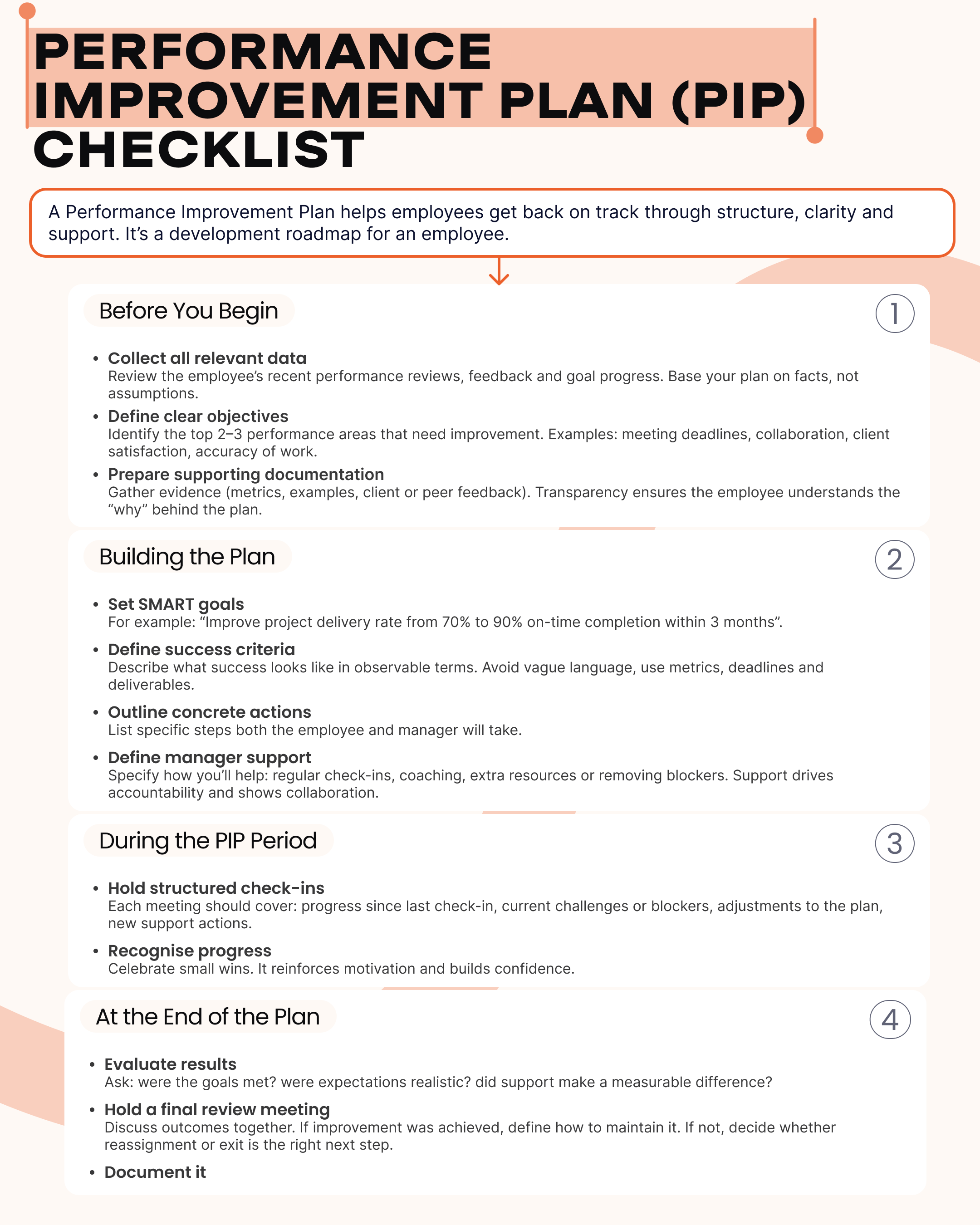
10. Performance Improvement PlanTemplate
Support employees who need structured guidance to improve performance. Best for HR teams handling underperformance constructively.
A PIP is not punishment — it’s a development tool. A good PIP includes:
- Specific areas of concern
- Measurable goals and timelines
- Manager and HR support actions
- Check-in schedule
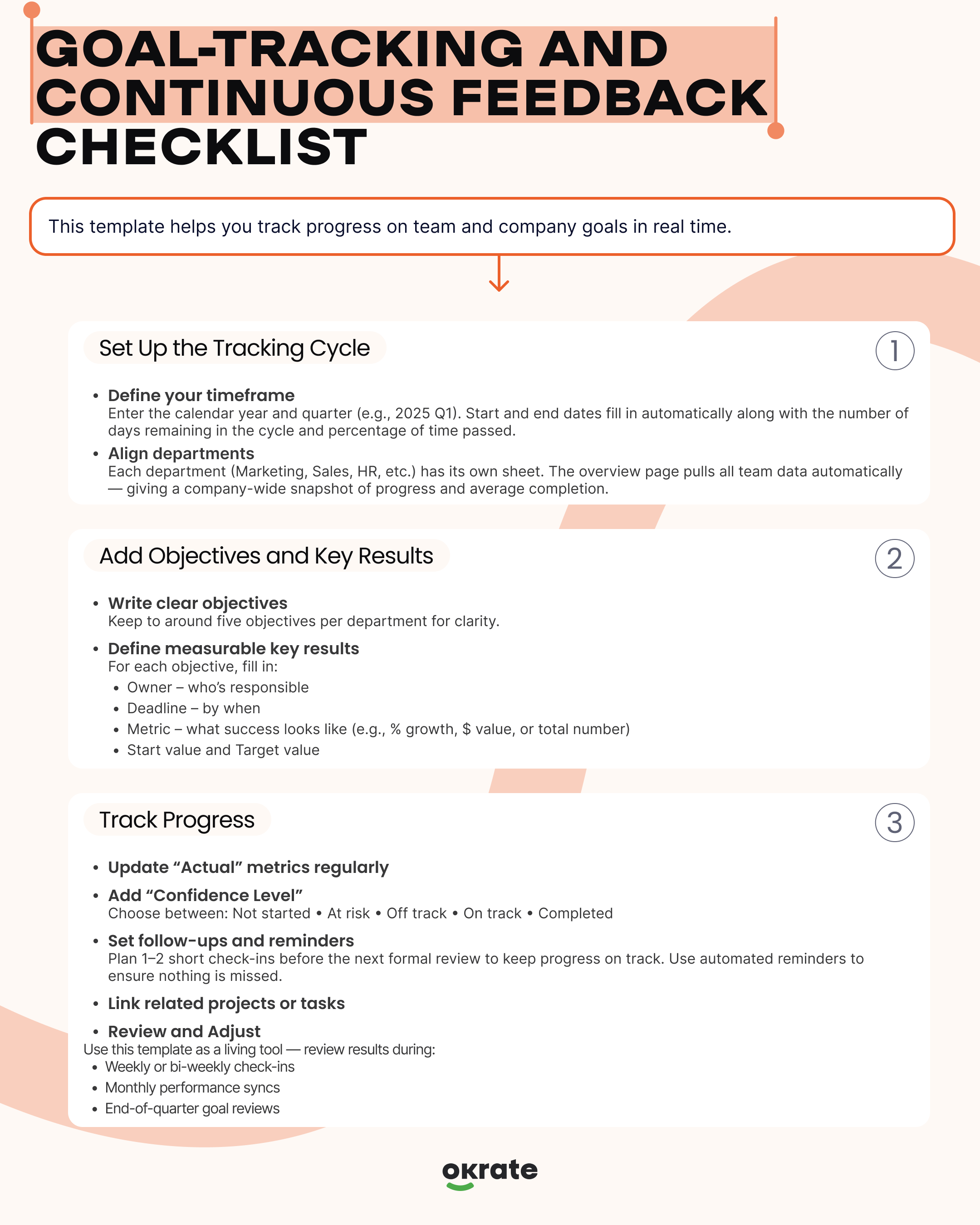
11. Goal-Tracking and Continuous Feedback Template
Helps track goals, progress and feedback between formal reviews. Best for companies adopting continuous performance management.
This template aligns daily work with long-term goals. It combines OKRs or SMART goals with regular check-ins and comments.
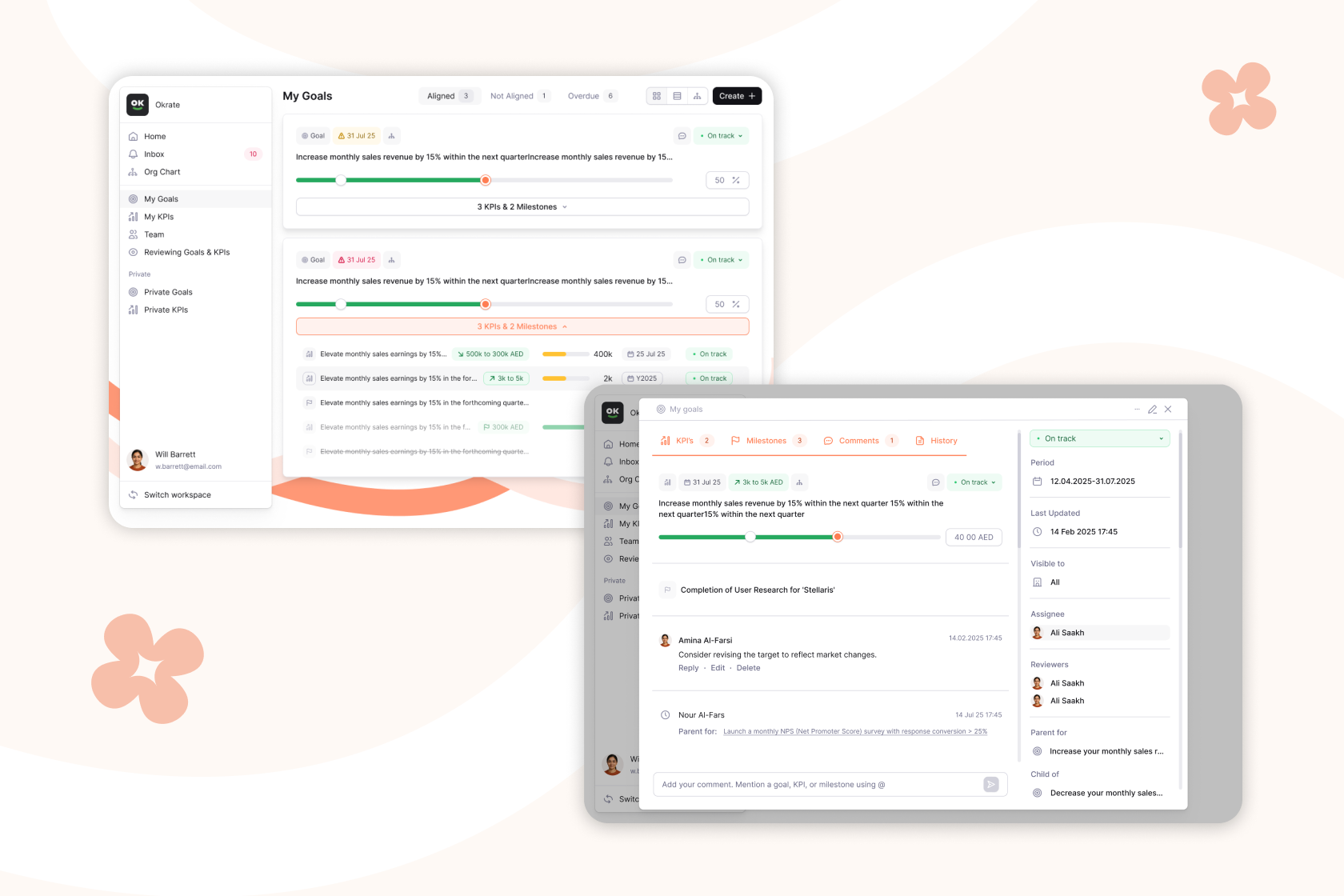
Use modern HR tools (like Okrate) that integrate goal-tracking, 1:1s and feedback in one place. Visibility makes accountability easier.
Use integrated HR tools like Okrate to connect goals, feedback, and analytics in one place.
Dashboards, reminders and comments make goal-tracking intuitive and transparent — no spreadsheets required.
Dashboards, reminders and comments make goal-tracking intuitive and transparent — no spreadsheets required.
How to Choose the Right Template
There’s no universal performance review format that fits every organisation. The right template depends on what you’re trying to achieve, how your company works and where you are in your growth journey.
1) Define the goal of your review
Before you pick a template, ask yourself: what do we want to learn from this review?
- If the goal is to evaluate annual performance and make reward decisions — choose a structured annual or competency-based review.
- If you want to keep feedback frequent, go for a mid-year or continuous feedback template.
- If your focus is on succession planning or leadership potential, the 9-box grid or 360-degree feedback will give you deeper insights.
When you know the “why,” the right format becomes obvious.
2) Choose the right cadence for your rhythm
Frequency matters just as much as format.
- If your company embraces continuous feedback, pair a goal-tracking template with regular check-ins and 1:1 forms.
- For teams that prefer structured cycles, stick with biannual reviews, a mid-year alignment and an annual reflection.
- For project-based environments, run reviews at the end of each project or sprint. They’re shorter but more relevant because feedback is fresh.
3) Keep the process transparent and fair
A great review template doesn’t just collect opinions, it builds trust. That means:
- clear rating scales and definitions so employees understand how they’re being evaluated
- space for employee feedback, etc.
When people feel heard and understand the “why” behind their rating, they’re more likely to accept it and act on feedback.
4) Train your managers — and support them continuously
Even the most beautifully designed template fails if managers don’t know how to use it. Run short, practical workshops on how to give feedback, use data and turn reviews into development conversations.
Share real examples of strong feedback phrasing, how to balance strengths and growth areas and how to handle sensitive conversations.
Drive Performance with Okrate
But a real impact comes from a system that connects goals, feedback and growth in one seamless flow.
That’s exactly what Okrate was built for. It’s a complete performance management platform that helps companies move from manual reviews to continuous performance and development. Our platform helps HR and managers turn performance management into an ongoing, transparent, and measurable process all in one place.
With Okrate, you can:
- Set and track goals and KPIs with clear deadlines, results and milestones. Choose whether goals are private, shared with your team or manager or visible across the company, giving every employee the right level of visibility and ownership.
- Cascade goals across the organisation, ensuring alignment from top-level strategy to individual contribution. Managers can give instant feedback or adjust goals as priorities shift.
- Visualise your organisation structure — explore departments, reporting lines and leader objectives at a glance, helping employees see how their work connects to company goals.
- Monitor progress with real-time analytics and dashboards that update automatically. Spot trends, identify bottlenecks and celebrate achievements, no manual reporting required.
- Stay on top of every deadline with smart reminders and notifications, so no review, milestone, or feedback request slips through the cracks.
- Run complete performance cycles — create review campaigns for entire departments or employee groups, define evaluation stages and track completion all within the platform.
Okrate brings everything together (goals, structure, analytics and reviews) to create a single, transparent performance ecosystem.
It’s not just about measuring results, it’s about helping your people grow and keeping your teams aligned every step of the way.
If you’re ready to modernise your performance process and make feedback a real driver of growth, Okrate is here to help.
Performance reviews are not a bureaucratic ritual, they’re an opportunity to build trust, recognise effort and enable growth.
Templates don’t replace good leadership, but they make it repeatable. A well-designed review process ensures that every employee gets fair, consistent feedback.
In the end, the best review template is the one your managers actually use not because HR told them to, but because it helps them lead better conversations, unlock potential and grow great people.
Templates don’t replace good leadership, but they make it repeatable. A well-designed review process ensures that every employee gets fair, consistent feedback.
In the end, the best review template is the one your managers actually use not because HR told them to, but because it helps them lead better conversations, unlock potential and grow great people.